PROFESSIONAL LEARNING FOR PRACTICE THAT HOLDS THE WHOLE PERSON
Clinical rigour and neuroaffirming practice should not be competing priorities.
Practitioners are increasingly being asked to move beyond deficit-based assessment, compliance-focused behaviour support and interventions that overlook identity, context or nervous-system safety.
The Inclusive Training Hub supports allied health professionals, behaviour support practitioners and emerging clinicians to build practice that is evidence-informed, ethically grounded and genuinely responsive to neurodivergent people.
This is learning designed to change how you formulate, collaborate and respond—not simply add new terminology to existing practice.
Explore Practitioner TrainingFor practitioners asking deeper questions
-
How do we maintain clinical accountability without centring compliance?
-
What does neuroaffirming behaviour support look like in complex situations?
-
How do identity, communication, trauma, sensory processing and systems interact?
-
How can we write plans that protect rights and remain practical for implementation teams?
-
What happens when the environment—not the person—is the primary source of distress?
-
How do we move from individual strategies to sustainable system change?
Our practitioner learning creates space for these questions while offering concrete frameworks, tools and examples you can take back into practice.
Choose your practitioner pathway
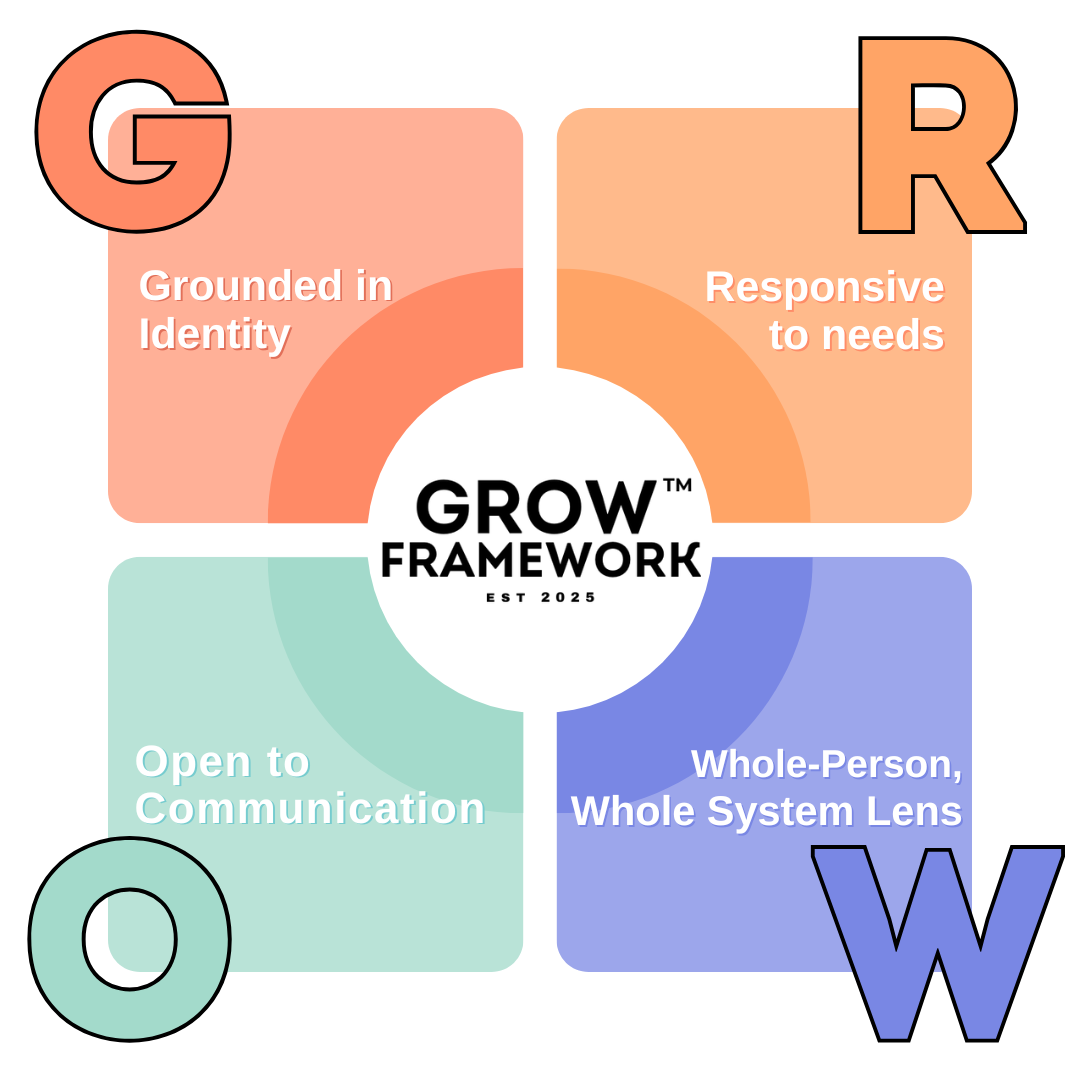
GROW™ Foundations: Understanding Behaviour Through a Neuroaffirming Lens
The foundational GROW™ training introduces a whole-person, whole-system framework for understanding behaviour through identity, needs, communication and context.
Best for practitioners, educators and professionals wanting a substantial self-paced foundation without certification or licensing.
GROW™ Certified Practitioner Pathway
For eligible professionals who want to demonstrate applied competence, use the GROW™ framework in practice and join an ongoing fidelity and licensing pathway.
Certification is distinct from completing the self-paced Foundations course.
GROW™ Level 2 Advanced Practitioner and Systems Leader
Advanced learning for practitioners ready to work with complex formulation, multidisciplinary systems, implementation barriers, leadership and systemic advocacy.

Neuroaffirming Practice for Professionals
A practical bridge between neuroaffirming principles and everyday professional decisions across therapy, education and community services.
The GROW™ difference
GROW™ supports practitioners to consider four connected domains:
G — Grounded in Identity
Understand the person before interpreting their behaviour. Protect identity, dignity, autonomy and authentic ways of being.
R — Responsive to Needs
Look beneath behaviour to identify sensory, emotional, physical, relational, communication and environmental needs.
O — Open to Communication Differences
Recognise all communication, including speech, AAC, gesture, movement, withdrawal, refusal and behaviour.
W — Whole Person, Whole System
Map the interaction between the person, relationships, environments, expectations, services, culture and wider systems.

Learning grounded in both evidence and lived experience
Our professional training brings together:
-
Neurodivergent and disability lived experience
-
Developmental and behaviour support expertise
-
Trauma-informed and nervous-system-aware practice
-
Human rights and restrictive-practice reduction
-
Communication access and sensory safety
-
Collaborative formulation
-
Family and implementation-team realities
-
Organisational and systemic change
It is not a replacement for discipline-specific registration requirements, clinical supervision or NDIS practitioner suitability processes. It is a framework for strengthening how you understand and apply your existing professional responsibilities.
Freqently Asked Questions
Does completing GROW™ Foundations make me a certified GROW™ Practitioner?
Is this only for behaviour support practitioners?
Does this replace supervision?
Can an organisation implement GROW™ across a team?
Move beyond strategies that ask, “How do we stop this?”
Build practice that asks what is happening, what matters to the person, what the system is contributing—and what meaningful support requires next.
Explore Practitioner Trainings